You mixed, kneaded, waited, and baked. The kitchen smells incredible. But instead of a light crust with an open, airy crumb, you pull out something that could double as a doorstop. Dense pizza dough is one of the most common frustrations in home pizza making - and one of the most fixable, once you understand what's actually going wrong.
The tricky part is that density isn't usually caused by a single mistake. It's the result of one or more variables being slightly off - hydration, fermentation, gluten development, shaping, oven temperature, or some combination. This guide covers all of them, starting with the most common culprits, so you can diagnose your specific situation and fix it for your next bake.
Not Enough Water (Low Hydration)
This is the number one reason pizza dough turns out dense, and it's also the easiest to fix.
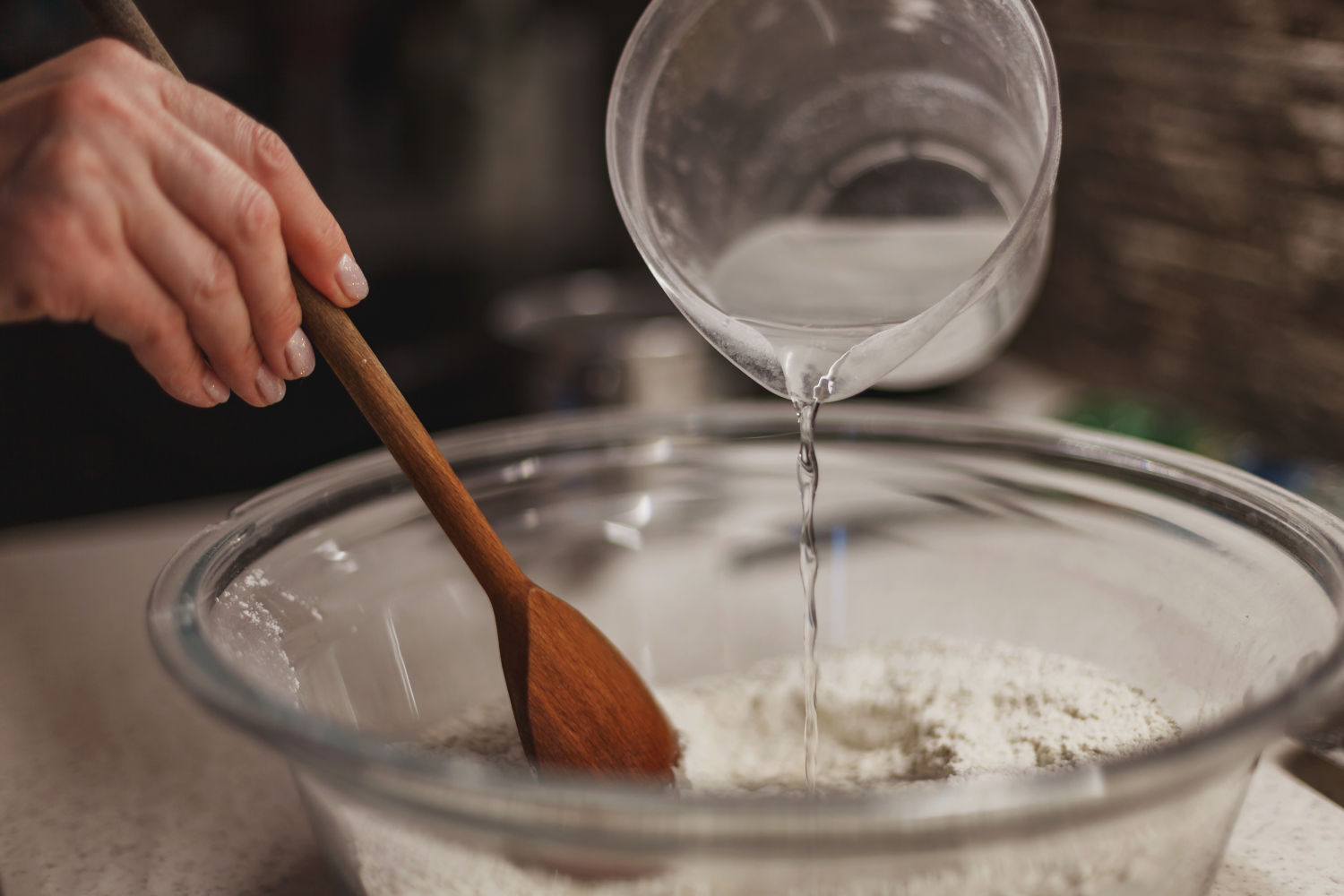
Hydration is the ratio of water to flour by weight. A dough at 58% hydration behaves very differently from one at 68%. When there isn't enough water, the gluten network forms tight and rigid. The yeast still produces carbon dioxide, but the stiff dough can't stretch to accommodate the gas. Those bubbles either stay tiny or pop entirely. The result is a compact, heavy crumb with no openness.
Most basic recipes land around 60% hydration, which produces a workable dough but not a particularly airy one. If your crust consistently comes out dense and bread-like, try bumping to 65%. If you want something noticeably lighter - closer to what you'd get at a good Neapolitan spot - push toward 70% or higher. The dough will be stickier and harder to handle, but that extra water turns to steam in the oven, blowing open the crumb structure from the inside.
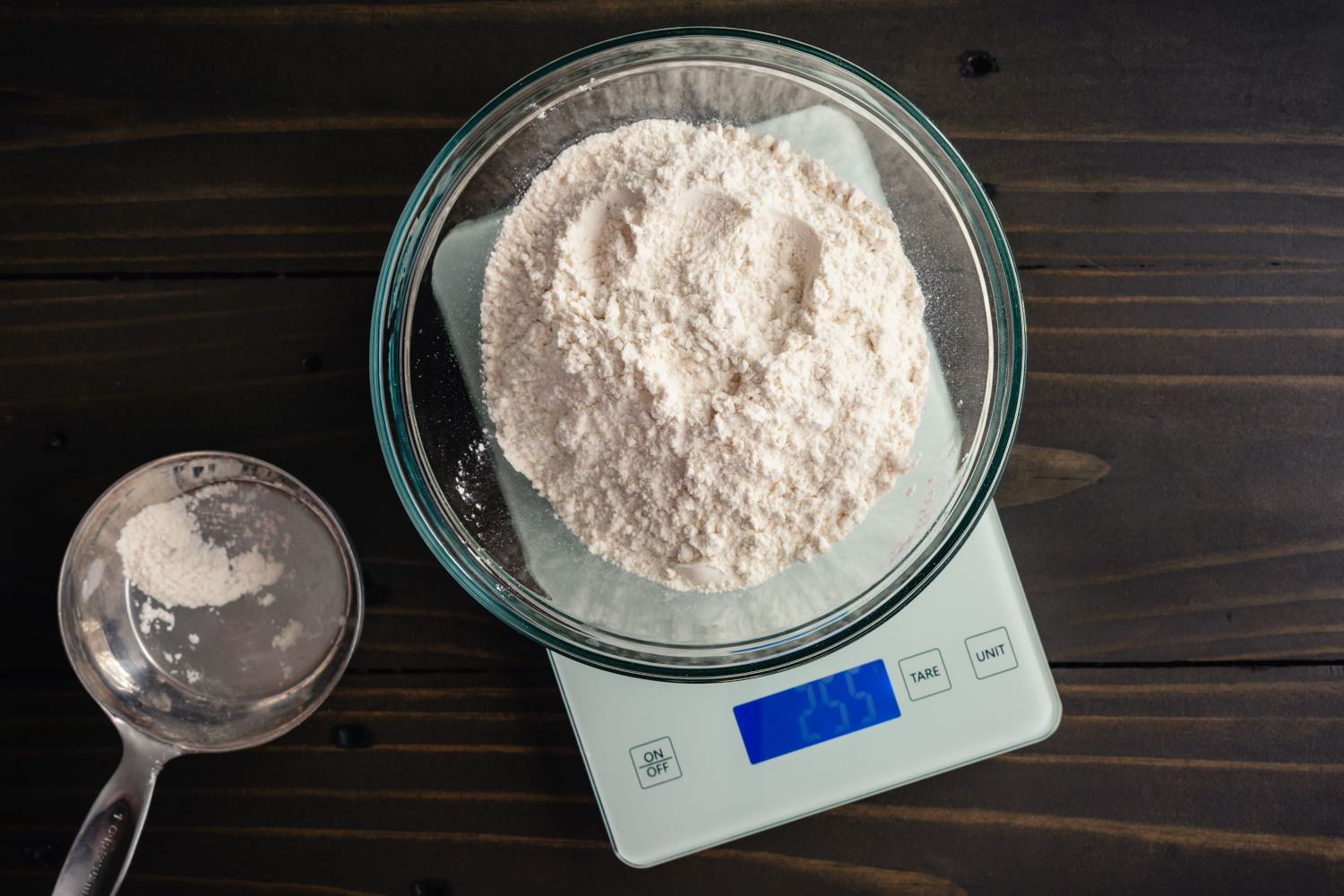
A critical note here: the most common way people end up with low hydration isn't by adding too little water. It's by adding too much flour. If you're scooping flour with a measuring cup, you're almost certainly packing in more than the recipe intends. A cup of flour can vary by 30% or more depending on how you scoop it. Weighing your ingredients with a digital scale eliminates this problem entirely and is the single most impactful upgrade for consistency.
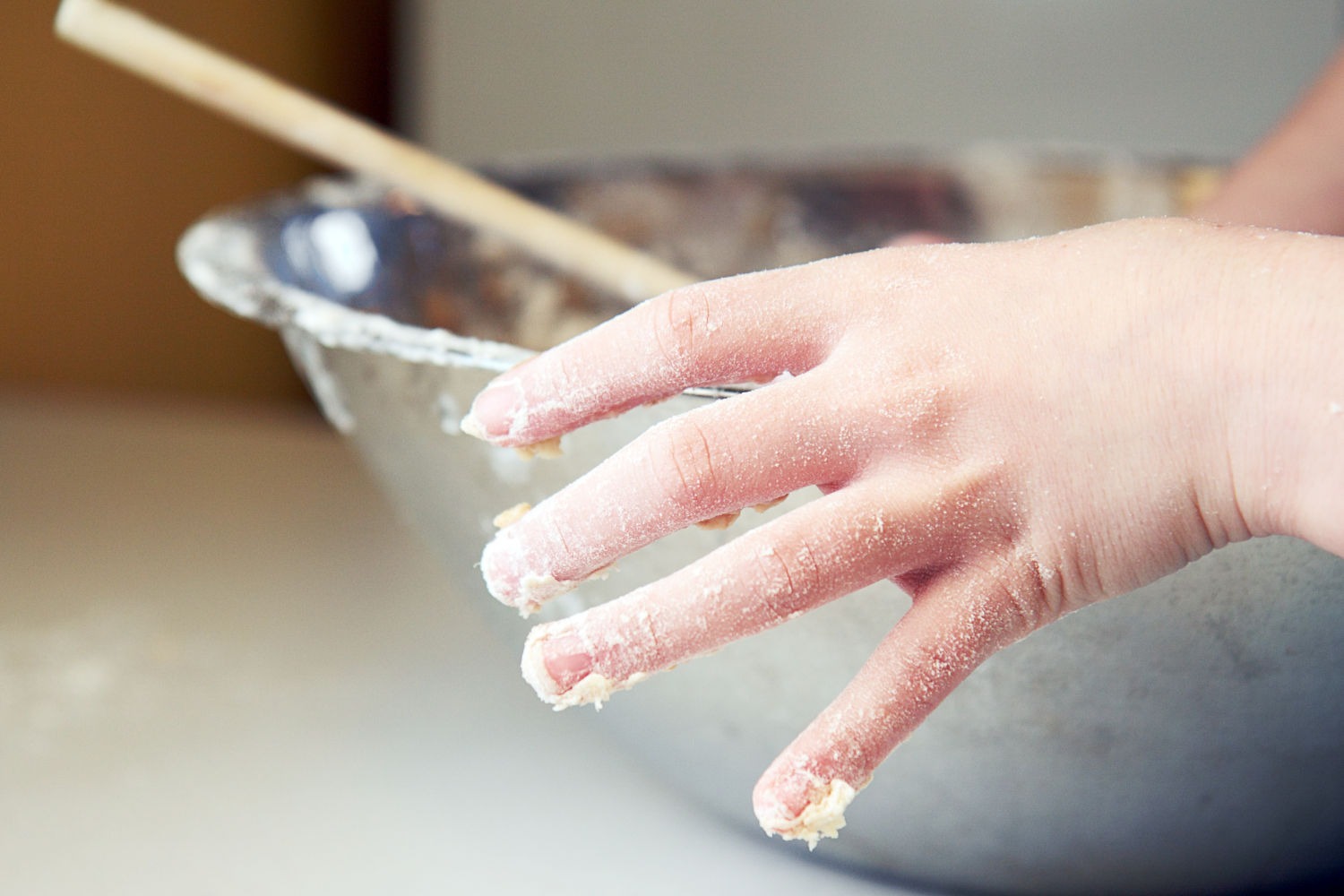
Also watch for flour creep during kneading. Every pinch of flour you dust on the counter gets absorbed into the dough and lowers the effective hydration. If you're working with a sticky dough and keep adding flour to manage it, you might be solving a handling problem while creating a density problem. Wet hands, a bench scraper, and a light touch go a lot further than extra flour.
Your Yeast Isn't Working
Yeast is the engine that produces the carbon dioxide gas responsible for lift and openness. If that engine stalls, your dough stays flat and dense no matter what else you do right.
There are a few common ways yeast fails:
It's dead on arrival. Yeast is a living organism with a shelf life. Check the expiration date, but also consider how it's been stored. A jar that's been opened for six months and sitting in a warm pantry is suspect even if the printed date says it's fine. Once opened, yeast should be stored in the fridge or freezer in an airtight container.
You killed it with hot water. Water above about 120°F will kill yeast on contact. This happens more often than people think, especially when someone skips the thermometer and just runs the tap until it feels "warm." The ideal range for activating active dry yeast is 100°F to 110°F - warm to the touch but not hot. If you're using instant yeast with an autolyse (where the yeast goes in after the flour and water have already rested together), the water temperature is less critical for activation since the yeast hydrates directly into the dough - aim for around 75°F to 80°F to hit a good final dough temperature. Either way, hot water is the enemy.
The yeast never activated. If you're using active dry yeast and mixing it straight into the flour without blooming it in warm water first, it may never fully wake up. Active dry yeast has a thicker outer coating that needs to dissolve before the cells can get to work. Instant yeast doesn't have this requirement - it can go directly into dry ingredients. Mixing up these two types is a common source of flat dough.
Too much salt in direct contact. Salt is hygroscopic - it pulls moisture out of whatever it touches. If you dump salt directly onto undissolved yeast, it can dehydrate and damage the cells before they ever get going. The best fix is structural: use an autolyse. Mix just your flour and water first and let them rest for 20 to 30 minutes. After the autolyse, sprinkle your yeast over the dough and mix briefly to distribute it. Then add salt, sugar, and oil. This sequence gives the yeast a chance to hydrate into the dough before it ever contacts salt, and it's the approach the PizzaLogic dough calculator recommends for every recipe it generates. If you're not autolysing, at minimum whisk the salt thoroughly into the dry flour so it's well dispersed before the yeast meets it.
If you're not sure whether your yeast is viable, test it. Dissolve a teaspoon in a half cup of warm water with a pinch of sugar. If it's foamy and active within 10 minutes, the yeast is fine and your problem is elsewhere. The pizza dough not rising guide covers every yeast failure scenario in more detail.
Under-Proofed Dough
You can have great yeast and perfect hydration and still end up with a dense crust if the dough hasn't fermented long enough. Under-proofing is probably the second most common cause of heavy pizza, right behind low hydration.
When dough is under-proofed, the yeast simply hasn't had enough time to produce sufficient gas. The gluten network hasn't relaxed. The result is a tight, compact crust that's heavy and chewy in the worst way - more like a cracker than a pizza.
Temperature is the main variable that controls how fast fermentation happens. At 75°F to 80°F, a typical room-temperature bulk rise takes roughly 2 to 4 hours depending on how much yeast you used, the flour type, and the hydration. If you're following a cold ferment schedule, that initial room-temp rise (usually about 2 hours, until the dough has grown roughly 50%) is just the first phase - the real development happens over 24 to 72 hours in the fridge. If you're doing a full room-temperature proof without cold fermenting, expect 6 to 8 hours or more for the dough to fully develop. At 65°F - a cool kitchen in winter - all of these timelines stretch significantly.
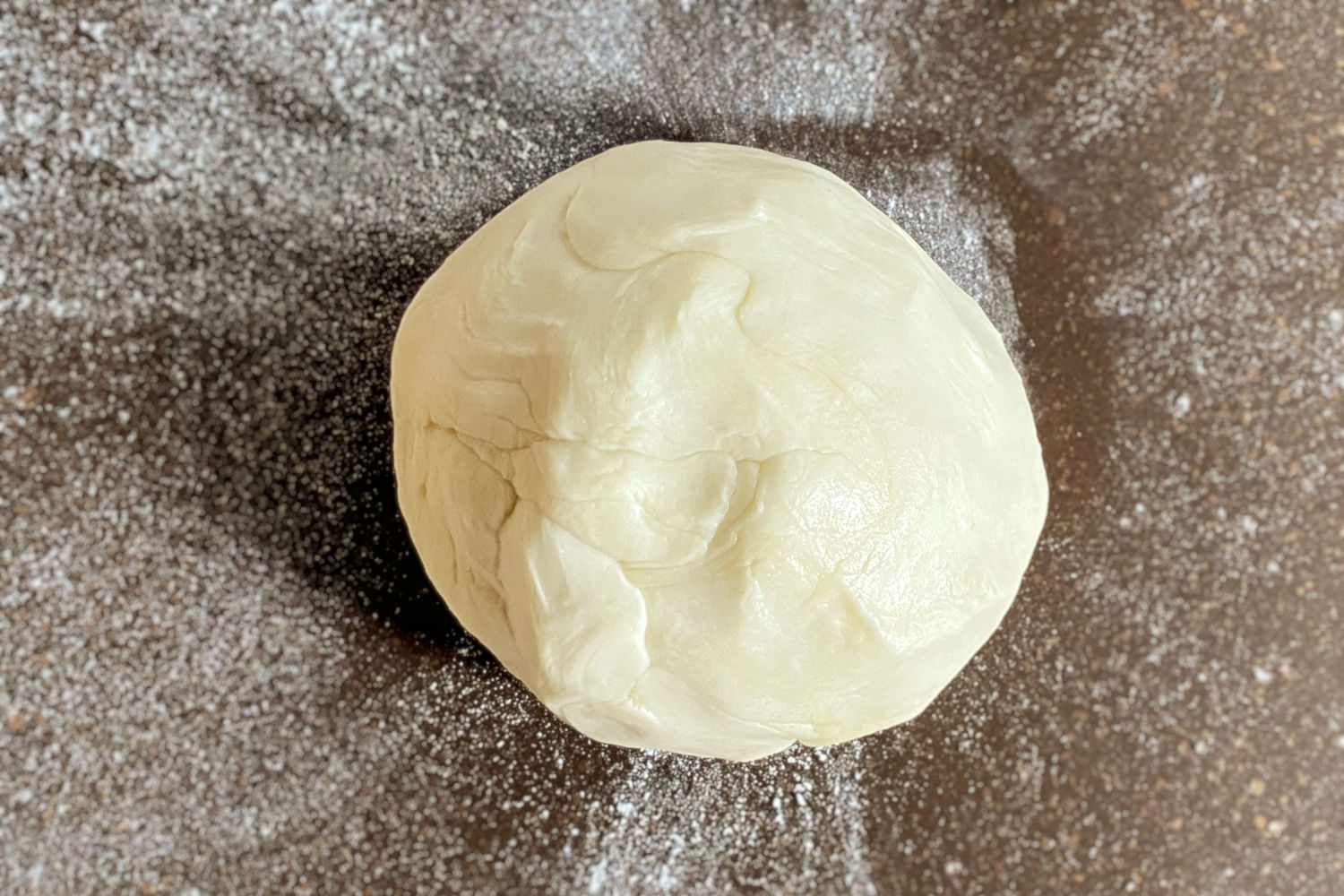
Signs your dough is under-proofed: it hasn't visibly grown, it feels tight and resistant when you try to stretch it, and the surface is smooth rather than slightly domed and pillowy. A properly proofed dough ball should look noticeably puffier than when you shaped it, feel light when you pick it up, and stretch without fighting you.
If your kitchen runs cold, find a warmer microclimate. The inside of a turned-off oven with just the light on typically sits around 78°F to 80°F - a perfect proofing environment. A bowl of hot water placed in the oven alongside the dough works too. For a deeper look at how to read your dough's fermentation stage and nail the timing, the complete proofing guide covers it all.
Over-Proofed Dough
Over-proofing might seem like the opposite problem, but it produces a surprisingly similar result: dense, flat crust.
Here's what happens. As the yeast keeps fermenting, the gas bubbles grow larger and larger. Eventually, the gluten network stretches past its limit and the bubble walls begin to tear. The dough deflates. Once those gluten strands have been overstretched, they lose their elasticity - they can't reinflate even if there's still active yeast producing gas. You end up with a dough that looks wrinkled or collapsed, feels slack and lifeless, and bakes into a flat, dense crust with none of the spring you were hoping for.
This is especially common with room-temperature proofs in warm kitchens, or when dough sits in the fridge for too many days. A 72-hour cold ferment is great for flavor, but pushing past 4 or 5 days (depending on your yeast amount and fridge temperature) often leads to over-fermentation. The dough develops a strong boozy or sour smell, the surface gets bubbly and wrinkled, and it tears easily when you stretch it.
If you catch it early - the dough is slightly over-proofed but still has some structure - you can gently reshape it into a ball and let it proof again for 30 to 60 minutes. This won't be as good as properly timed dough, but it's salvageable. If the dough has fully collapsed and smells strongly of alcohol, there's not much to be done. Use it for something else - flatbread, garlic knots, focaccia - and adjust your timing for the next batch.
Not Enough Gluten Development
Gluten is the structural framework that traps gas and gives your crust its characteristic chew and lift. Without adequate gluten development, the dough can't hold onto the CO2 that yeast produces. The gas escapes, and you're left with a flat, dense result.
Under-kneading is the most obvious cause. If you mix your ingredients together and stop as soon as they form a shaggy mass, the gluten hasn't had time to organize into the elastic, interconnected network it needs to be. The dough will tear easily, won't stretch thin, and can't hold gas effectively.
The windowpane test is the standard check. Pinch off a small piece of dough and gently stretch it between your fingers. If you can pull it thin enough to see light through it without it tearing, your gluten is developed. If it tears immediately, keep kneading - or give it a rest and come back to it, since time and hydration do a lot of the development work on their own.
The single best tool for gluten development with less effort is an autolyse. Mix just the flour and water, cover, and rest for 20 to 30 minutes before adding yeast, salt, oil, or sugar. During that rest, the flour fully hydrates and gluten begins forming passively. After a proper autolyse, you'll need significantly less kneading - usually just 5 to 7 minutes in a stand mixer - to reach full development. This is the workflow the PizzaLogic dough calculator builds into every recipe, and it's especially useful for high-hydration doughs that are hard to knead in the traditional sense.
Over-kneading is the flip side. It's hard to do by hand, but easy to do in a stand mixer. An over-worked dough becomes extremely tight and elastic - it snaps back aggressively when stretched and resists shaping. The gluten network is so tense that gas can't expand it. The result is a tough, dense crust. If your dough is fighting you after mixing, give it a longer rest before shaping. Time allows the gluten to relax even if it's been overdeveloped.
Wrong Flour
Not all flour behaves the same, and picking the wrong one for your pizza style can lead directly to a dense crust.
Too little protein (below 10%). Cake flour, pastry flour, and some store-brand all-purpose flours don't have enough gluten-forming protein to build a strong dough structure. The crust bakes up crumbly or flat rather than chewy and open.
Too much protein (above 14%). High-gluten bread flour builds an extremely strong, tight network that can resist expansion. This is great for bagels. For pizza - especially styles that rely on an open, airy crumb - it can make the crust tough and dense rather than light. Bread flour isn't automatically wrong for pizza, but it needs higher hydration and longer fermentation to relax the extra gluten into something workable.
The right range for most pizza styles is 11% to 13% protein. Italian Tipo 00 flour (like Caputo Pizzeria) sits in this range and is finely milled, which helps with hydration and extensibility. King Arthur all-purpose is around 11.7% and works well. The flour guide has a full breakdown of which flour works for which style and oven type.
Whole wheat flour deserves a special mention. The bran in whole wheat physically cuts through gluten strands as the dough develops, weakening the structure. Whole wheat doughs need higher hydration (the bran absorbs more water), a longer autolyse, and are best used as a blend - 20% to 30% whole wheat mixed with a strong white flour - rather than at 100%.
Cold Dough Straight from the Fridge
If you cold ferment your dough (and you should - it's one of the best things you can do for flavor), there's a critical step a lot of people skip: the warm-up.
Cold dough is stiff. The gluten network tightens at low temperatures. The yeast is barely active. The gas that formed during fermentation is contracted. If you pull a dough ball from the fridge and try to stretch it immediately, it'll fight you, tear, snap back, and the bubbles will be small and tightly packed. The baked result will be dense and chewy.
The fix is patience. Let the dough sit at room temperature for 2 to 3 hours before you shape it. You're looking for the dough to relax, soften, and come up to temperature. It should feel pliable and stretchy, not stiff and resistant. In a warm kitchen this might happen in under 2 hours. In a cool one, it could take the full 3. Touch is a better guide than the clock here.
Poor Shaping and Degassing
How you handle the dough between proofing and baking makes a real difference in crumb structure.
Pressing out all the gas. If you use a rolling pin to flatten your dough, you're crushing the carefully developed bubble structure that fermentation created. A rolling pin produces an even, thin sheet with a uniformly dense crumb - fine for a cracker-thin style, but terrible if you want a light, airy crust. For most pizza styles, shape by hand. Press from the center outward, leaving the outer edge (the cornicione) untouched so it retains its gas.
Not letting shaped dough rest. If you stretch your dough and it keeps snapping back, the gluten is too tight. Forcing it just creates a thick, uneven disc that bakes up dense. Set it down, cover it, and wait 10 to 15 minutes. The gluten will relax and let you finish shaping without a fight.
Overhandling in general. Every time you pick up, flip, and re-stretch the dough, you're popping bubbles. Work efficiently. Get it shaped and onto the peel (or into the pan for pan styles) quickly, then top and launch. A dusting of semolina on the peel helps the pizza slide off cleanly so you're not shaking and jostling it on a hot steel.
Oven Temperature Too Low
This one often gets overlooked, but it's a major factor. Pizza needs aggressive heat. When the oven isn't hot enough, two things go wrong.
First, the dough sits in the oven longer. Extended bake times dry out the crust, creating a thick, hard shell without the open interior structure you're after. Second, you lose oven spring. Oven spring is the rapid, final burst of rise that happens when dough first hits intense heat. The remaining yeast produces a last surge of gas, and the water in the dough flashes to steam, inflating the crust from inside. In a cool oven, this process is sluggish instead of explosive, and you get a flat, dense result.
For a home oven, preheat to the highest temperature it'll reach - usually 500°F to 550°F - with a pizza steel or stone inside for at least 45 minutes to an hour. The steel or stone needs to be fully saturated with heat so it transfers energy into the dough's bottom crust immediately on contact. Positioning the steel on the top rack and switching to the broiler for part of the bake can help drive additional oven spring from above while the hot steel handles the bottom. If you're using a home pizza oven like an Ooni, you're already getting the temperatures you need - just make sure the stone has had enough time to preheat.
Par-baking is another option worth considering, especially for thicker styles or loaded pizzas where the toppings add so much moisture that the center stays doughy. A short pre-bake sets the crust structure before toppings go on.
Too Much Sugar or Oil
Small amounts of sugar and olive oil are fine - even beneficial. Sugar feeds yeast and promotes browning. Oil lubricates the gluten network and adds tenderness.
But too much of either causes problems. Excess sugar pulls water away from the flour through osmotic pressure, effectively lowering your hydration. It also hyper-feeds the yeast early on, which can lead to a rapid initial rise followed by early exhaustion - the yeast burns through the available food and stalls before the dough is fully developed. The result is a crust that's dense in the middle and overly browned on the outside.
Too much oil coats the gluten strands and prevents them from bonding properly. The network stays weak and can't trap gas effectively. For most pizza dough, keep oil at or below 3% of the flour weight and sugar at or below 2%. If your recipe calls for significantly more than that, it's moving into enriched-dough territory (think focaccia or some Detroit styles), which requires adjusted expectations and technique.
Too Much Dough for the Pizza Size
This one is simple but easy to miss. If your dough ball is too large for the diameter you're stretching it to, the crust will be thick. A thick crust takes longer to bake through, traps more moisture, and - unless it's properly proofed and baked at high heat - ends up dense and bready.
Use the PizzaLogic dough calculator to dial in the right dough ball weight for your target pizza size and style. For a standard 12-inch round with a moderate crust, you're typically looking at 250g to 280g. A 16-inch New York-style pie might use 350g to 400g stretched much thinner. Getting this ratio right matters more than most people realize.
Altitude
If you live at high altitude - roughly 3,000 feet and above - the lower atmospheric pressure changes how dough behaves in ways that can lead to density issues.
At altitude, gas expands more readily. Dough rises faster and the bubbles grow larger, but the gluten structure may not have developed enough to support them. The result is over-proofing, followed by collapse, followed by a dense bake. High altitude also means water boils at a lower temperature, so moisture evaporates faster from the dough during baking.
Adjustments to consider: reduce your yeast slightly to slow fermentation. How much depends on who you ask - some sources recommend cutting yeast by as much as 25%, but that's aggressive and can lead to under-proofing problems of its own. The PizzaLogic dough calculator takes a more conservative approach, suggesting around a 7% reduction at 5,000 feet and scaling gradually from there. That's closer to what a lot of experienced high-altitude bakers actually do in practice - a subtle adjustment to yeast combined with more attention to timing. Many Colorado pizza pros skip the yeast reduction entirely and just shorten their rise times, since the dough reaches its target volume faster at altitude anyway.
The other adjustments matter too: increase hydration by around 5% to compensate for faster moisture loss in dry mountain air, and watch your oven temperature carefully. Water boils at a lower temperature at altitude, which means the water in your dough flashes to steam sooner. In a very hot pizza oven, that can cause the crust to puff and char before the interior is cooked through. A slightly lower bake temperature (15°F to 25°F below what you'd use at sea level) with a marginally longer bake can help.
How to Fix Dense Pizza Dough That's Already Mixed
If you're standing in the kitchen right now with a dense, tight dough ball, here's what you can do.
If it hasn't risen yet: give it more time in a warm environment. A dough that feels like a brick often just needs a few more hours. Put it in a turned-off oven with the light on and check every 30 to 45 minutes. If there's zero change after 2 to 3 hours in a warm spot, the yeast is likely dead and the dough needs to be remade.
If it rose but feels tight and stiff: the gluten is probably overdeveloped or the dough is cold. Let it sit at room temperature for another hour or two. Time will relax the gluten. If it's genuinely too dry (low hydration), you can work in a small amount of water by wetting your hands and folding the dough over itself repeatedly. This isn't ideal - it's hard to incorporate water evenly after the fact - but it can help.
If it's already been baked and came out dense: there's no reversing a baked crust. But the information is useful. Think about what was different this time - did you change flour, skip the scale, shorten the proof, use cold dough, or forget to preheat long enough? Adjust one or two variables at a time and take notes. Consistency comes from understanding which lever to pull.
The Checklist
Before your next bake, run through this:
Ingredients: Weigh everything on a scale. Confirm your hydration is at least 63% to 65% for a standard pizza. Test your yeast if there's any doubt about viability. Use a flour with 11% to 13% protein.
Mixing: Start with an autolyse - flour and water only, rested 20 to 30 minutes. Then add yeast first, mix briefly, then salt, sugar, and oil. Knead until the dough passes the windowpane test. In a stand mixer, that's usually 5 to 7 minutes on low-medium after the autolyse has done the heavy lifting.
Fermentation: Give the dough enough time. A short bulk rise at room temperature (about 2 hours, or until the dough grows roughly 50%) followed by a 24 to 72-hour cold ferment is the approach that consistently produces the best results. If proofing entirely at room temperature, wait until the dough has clearly grown and feels airy, not just until the recipe's timer goes off.
Prep: Bring cold-fermented dough to room temperature for 2 to 3 hours before stretching. Shape by hand, not with a rolling pin. Don't overwork it.
Oven: Preheat to maximum temperature (500°F+ for home ovens) with a steel or stone inside for at least 45 minutes. Hot oven, fast bake - that's how you get lift and openness rather than a dried-out brick.
Dense pizza dough is frustrating, but it's a solved problem. Every cause has a specific fix, and once you identify which variable is off for your setup, the improvement is dramatic. The difference between a dense crust and a light, airy one usually comes down to small adjustments - a few more grams of water, an extra hour of proofing, a hotter oven. Small changes, big results.