You spent all afternoon fermenting the dough, making fresh sauce, and perfecting your toppings. You pulled some great pizza out of the oven, but there are a few slices left. When you put that kind of effort into a pie, every extra slice deserves to be treated right. So let's break down the actual rules of pizza storage - food safety, fridge life, freezer life, and how to get the most out of what you made.
First: Get It Off the Counter
The window for leaving pizza at room temperature is shorter than most people think. The USDA's guideline is two hours max. After that, the pizza has spent too long in the "danger zone" - 40°F to 140°F - where bacteria multiply fast enough to cause problems.
If your kitchen is particularly warm (above 90°F), that window shrinks to one hour.
If you ordered from your favorite pizza shop, leaving the box on the counter overnight is one of those things people do all the time and mostly get away with, but it's genuinely not worth the risk.
Get the slices into storage within two hours. Cool them down first if they just came out of the oven - you don't want to dump hot pizza straight into the fridge and raise the internal temp of everything around it.
How Long Is Leftover Pizza Good For in the Fridge?
Properly stored, leftover pizza keeps for three to four days in the refrigerator. That's the consensus from food safety sources, and it lines up with real-world quality too - by day four, even a well-stored slice is starting to lose what made it good.
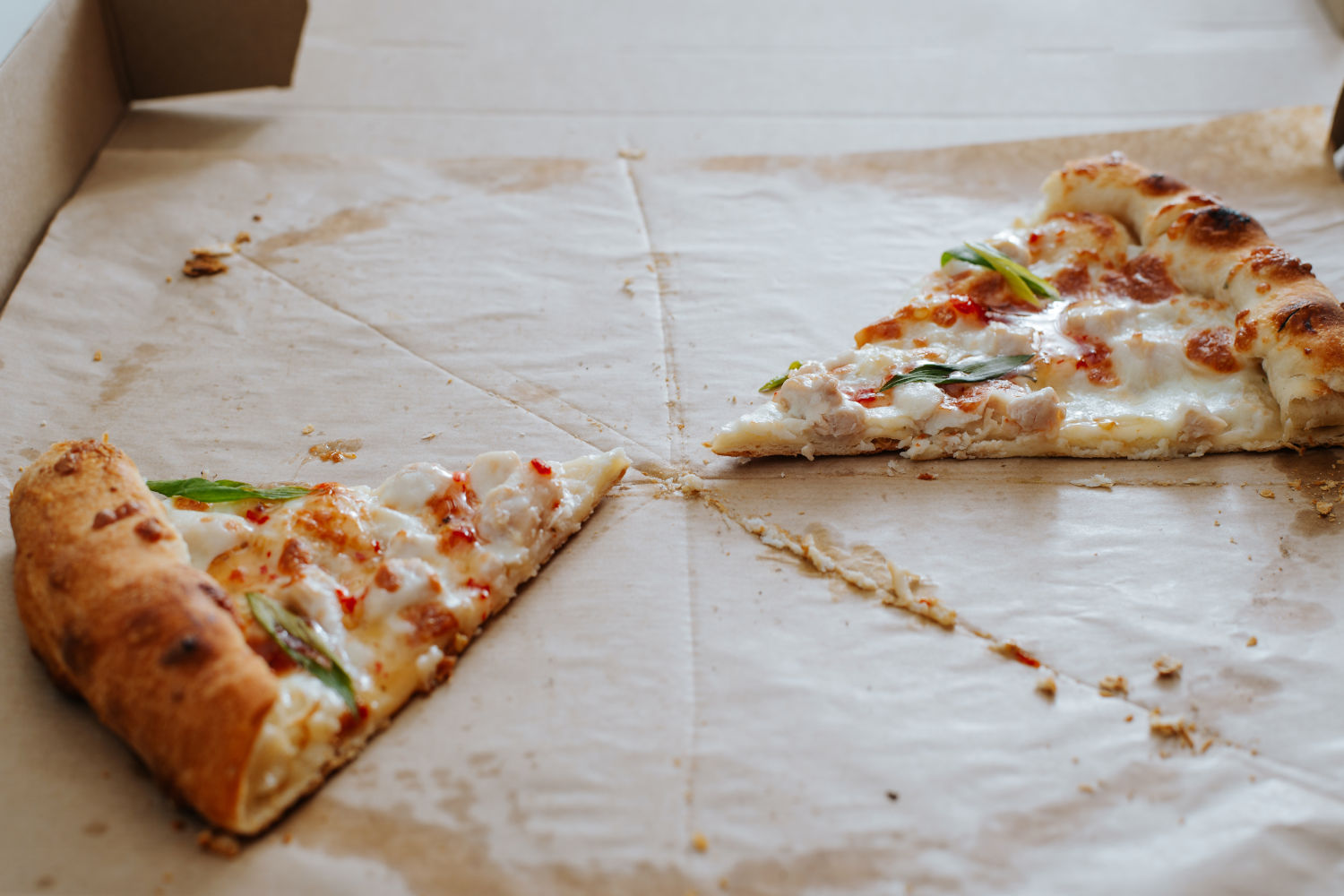
The biggest mistake people make is leaving slices in the cardboard box. The box doesn't seal, which means the fridge air is constantly wicking moisture out of your crust. You'll end up with something dry and stale by day two.
Better approach: stack slices in an airtight container with a layer of parchment paper between each one. The parchment keeps them from sticking together and helps protect the cheese from absorbing fridge odors. Glass containers work especially well because they don't hold onto smells the way plastic can.
If you don't have a container big enough, wrapping individual slices tightly in plastic wrap works too.
Does the topping type affect how long pizza lasts?
Yes, somewhat. Meat toppings - especially anything that was already cooked and cooled before going on the pie, like grilled chicken or ground beef - are more perishable than straight cheese or vegetable pizzas. A heavily loaded meat pizza is worth eating within three days rather than pushing to four. Seafood toppings are even more time-sensitive; aim for two days max.
How to Tell If Leftover Pizza Has Gone Bad
Don't rely purely on the calendar. A few signs that pizza should go in the trash:
- A sour or off smell when you open the container
- Visible mold - usually fuzzy white, green, or black spots, often starting on the crust edges
- Slime or unusually wet texture on the toppings
- Cheese that looks discolored or has separated strangely
If it smells and looks fine at day four, use your judgment. If anything seems off before that, don't second-guess it.
Freezing Leftover Pizza
The fridge gets you three to four days. For anything beyond that, the freezer is the answer.
Wrap individual slices in plastic wrap first, then in a layer of aluminum foil. The double wrap matters - plastic alone isn't enough to block freezer air over time. You can also use a zip freezer bag (with the air pressed out) in place of the foil if that's what you have.
Stored this way, pizza stays at good quality for one to two months. It'll technically remain safe longer than that, but freezer burn will eventually get into the crust and toppings. After two months, the texture of that hydrated, fermented dough you worked hard on starts to suffer.
Label your slices with the date. It's easy to forget when something went in.
Thawing and reheating frozen pizza
The best approach is to move frozen slices to the fridge the night before and let them thaw slowly. From there, reheat using the same methods you'd use for fresh leftovers.
If you're reheating from frozen directly, a low oven (300-325°F) for 15-20 minutes works well - it gives the crust time to thaw and crisp without burning the cheese. A skillet works too, though it takes more attention.
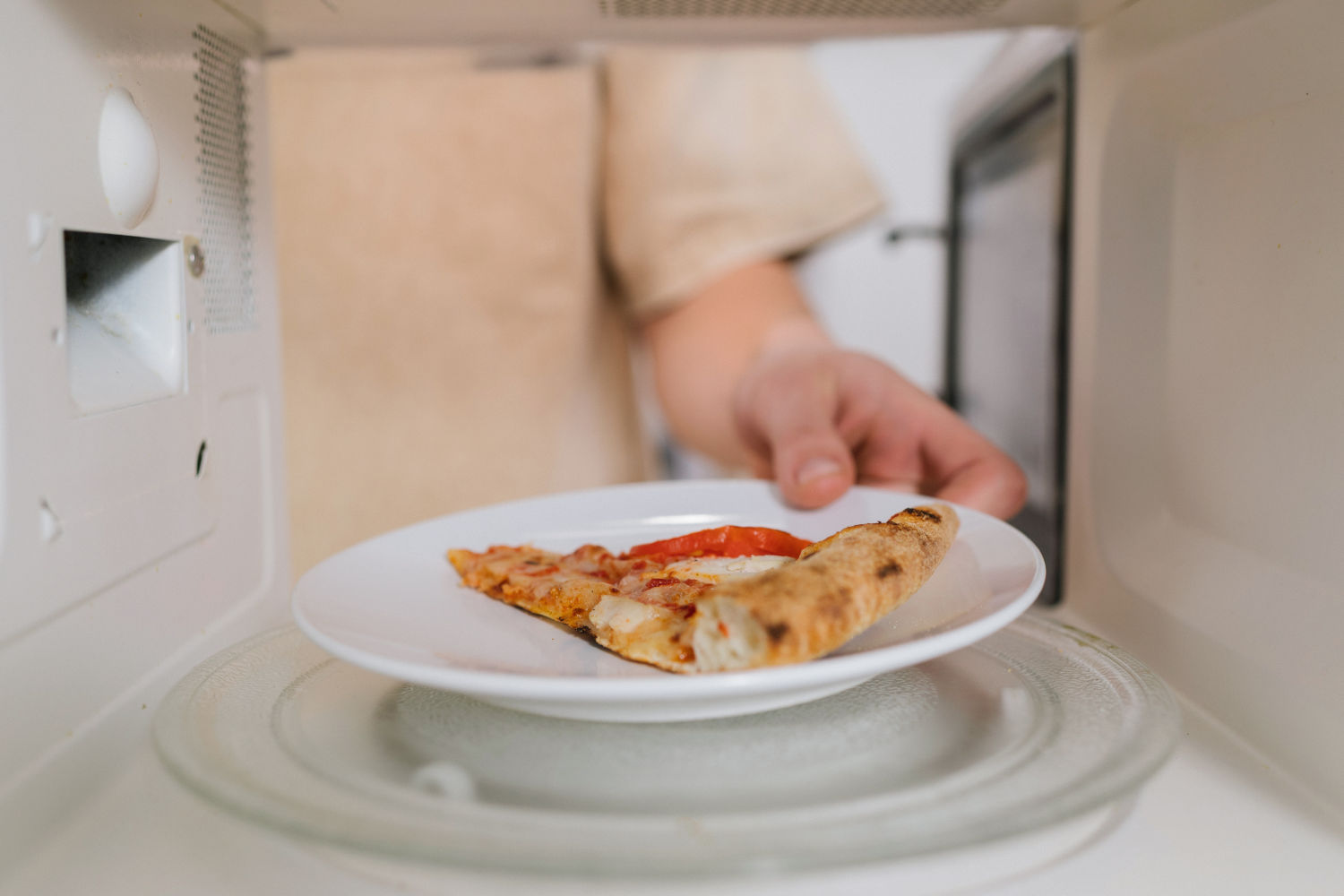
For the full breakdown on getting your leftover slices back to their best, the guide on how to reheat pizza covers every method in detail.
Recipes Using Leftover Pizza
Sometimes reheating isn't what you want. If you've got a couple of slices and feel like doing something different with them, there are some genuinely good uses for day-old pizza. (If you have leftover raw dough instead of cooked slices, there's a whole list of things you can do with it.)
Pizza eggs
Chop a slice into small pieces and toss them into a hot skillet until the cheese melts and the crust crisps up a bit. Pour beaten eggs over the top and scramble everything together until cooked through. The sauce, cheese, and seasoned toppings make for a savory, loaded breakfast scramble that's better than it sounds.
Pizza grilled cheese
Two slices, face-to-face in a buttered skillet. Press them together as they heat - the cheese re-melts and bonds everything into something that's basically a calzone-adjacent sandwich. Works particularly well with a saucier, cheese-heavy slice.
Pizza croutons
Cut day-old crust into cubes, toss with a little olive oil, and bake at 375°F until they're crunchy all the way through. Good on a Caesar salad or a tomato soup. Thin-crust pizza makes especially crispy croutons.
Pizza soup
This works best if you have multiple slices with different toppings. Chop everything - crust included - into rough pieces and simmer in a pot with crushed tomatoes, chicken or vegetable broth, Italian seasoning, and a handful of fresh or frozen vegetables. The crust absorbs the broth, the cheese melts in, and it becomes a thick, deeply savory minestrone-style soup. Add a parmesan rind if you have one.
Pizza bread pudding (savory)
A less obvious option, but a good one. Tear the leftover pizza into chunks and pack them into a baking dish. Pour a mixture of beaten eggs and milk over the top - roughly 3 eggs and ¾ cup of milk per two or three slices - press everything down so it soaks, and bake at 350°F for about 30 minutes until set. The result is something between a frittata and a savory bread pudding. Worth trying if you have a lot of slices to use up.
The Short Version
- Room temperature: two hours max
- Fridge: three to four days in an airtight container
- Freezer: one to two months with proper double-wrapping
- Signs it's gone bad: off smell, visible mold, slimy texture
- Reheat it right - see the full reheating guide for methods that actually work
A good homemade pizza takes real time and care. The storage part is easy by comparison - just don't leave it in the box.