If you're reading this, you've probably already figured out that baking pizza on a bare oven rack or sheet pan isn't cutting it. Good - that means you're ready for the real conversation: pizza stone vs steel, and which one actually belongs in your oven.
The short answer is that either one will dramatically improve your home pizza compared to a sheet pan. But they're not interchangeable, and depending on what kind of pizza you make, how often you bake, and what you're willing to spend, one is probably a better fit for you than the other.
Let's break it down honestly - no hype, just physics and practical trade-offs.
The Core Difference: It's About Heat Transfer
Before we get into the side-by-side stuff, you need to understand the one thing that separates these two surfaces at a fundamental level: thermal conductivity - how fast a material can dump its stored heat into your dough.
Steel conducts heat roughly 18 to 20 times faster than ceramic or cordierite (the materials pizza stones are made from). That's not a typo, and it's not a rounding error. It's a completely different category of heat transfer.
Both surfaces store heat. Both radiate it into your crust. But steel delivers that energy almost instantly on contact, while stone releases it more gradually. That single difference cascades into everything else - bake time, crust texture, oven spring, browning, and how long you wait between pies.
If you want the deep dive on either surface individually, I've written full guides on pizza steels and pizza stones. This post is all about the head-to-head.
Crust Performance: Steel Wins on Speed and Char
This is where the conductivity difference shows up on your plate.
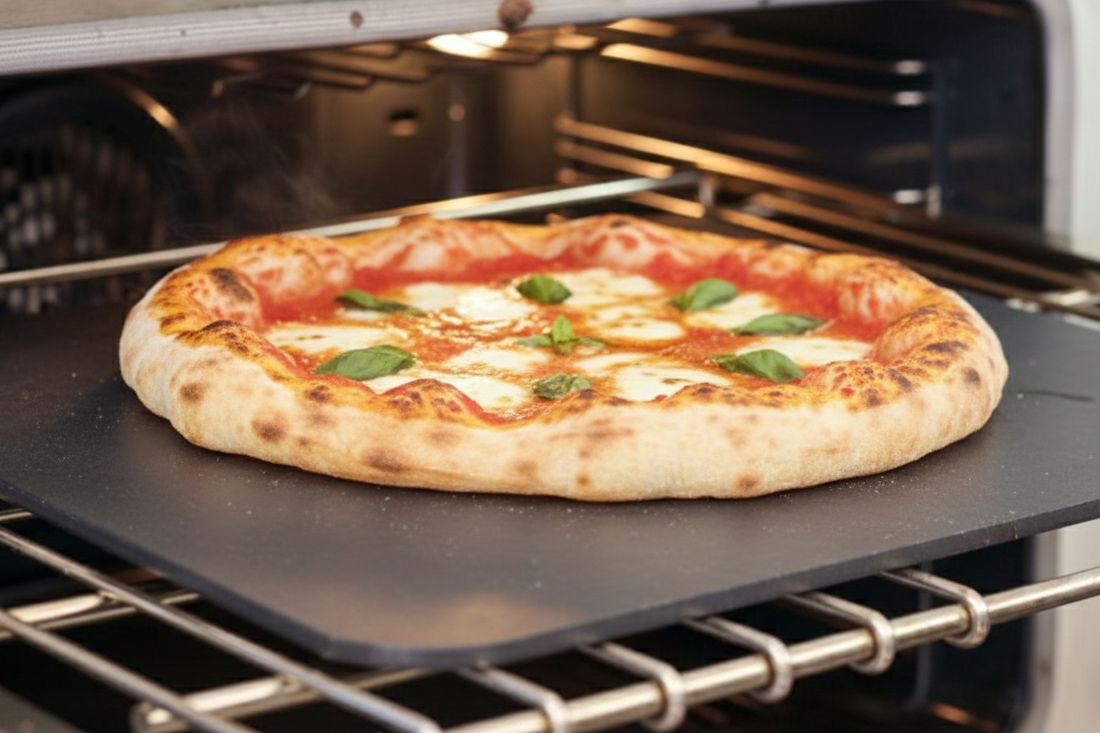
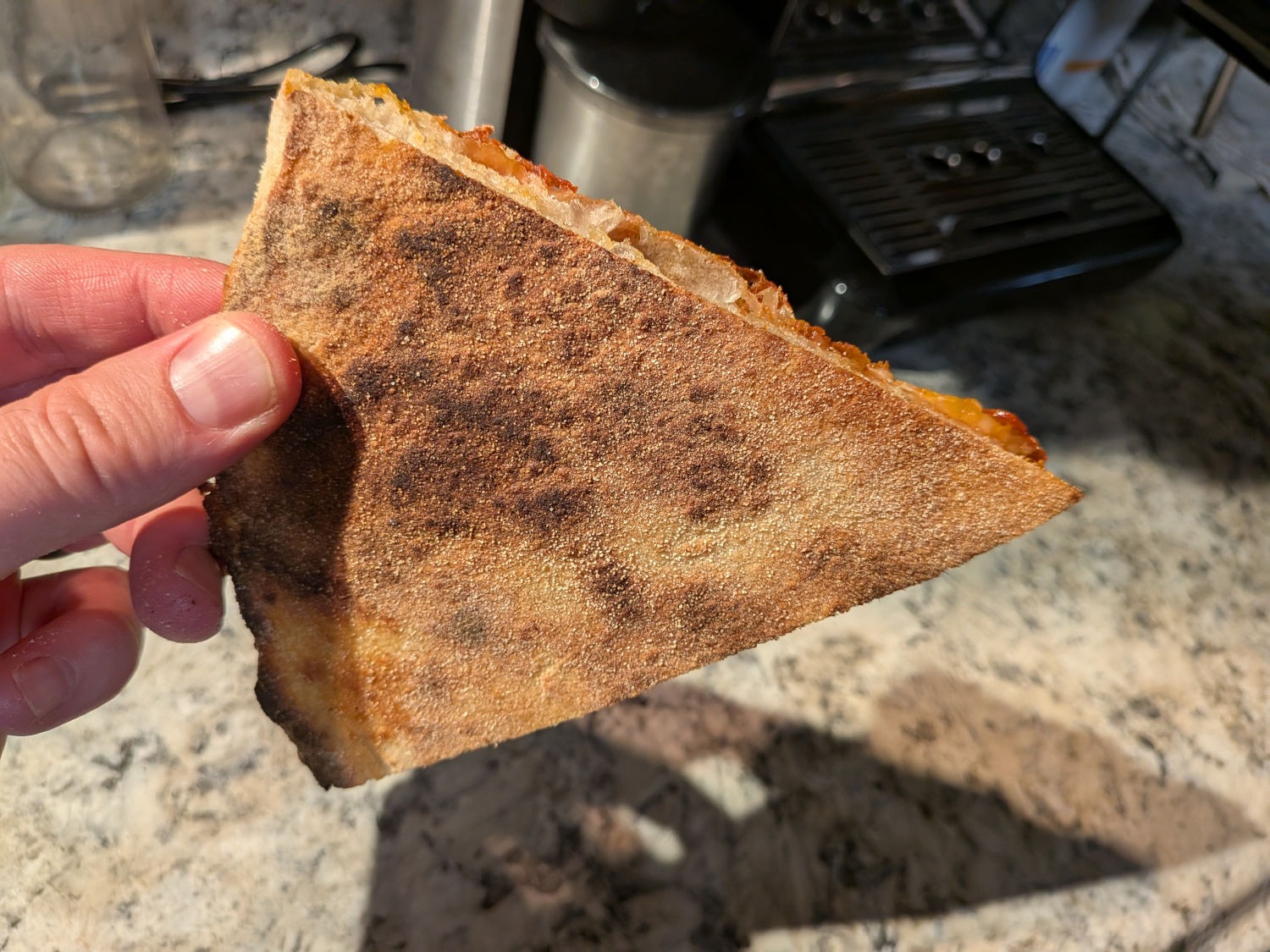
On a properly preheated pizza steel, a standard home oven pizza bakes in about 4 to 6 minutes. You get aggressive bottom browning, a fast and dramatic oven spring (that puffy cornicione), and - if you use the broiler trick - genuine char and blistering on the crust. It's the closest you can get to a high-heat pizzeria oven without buying one.
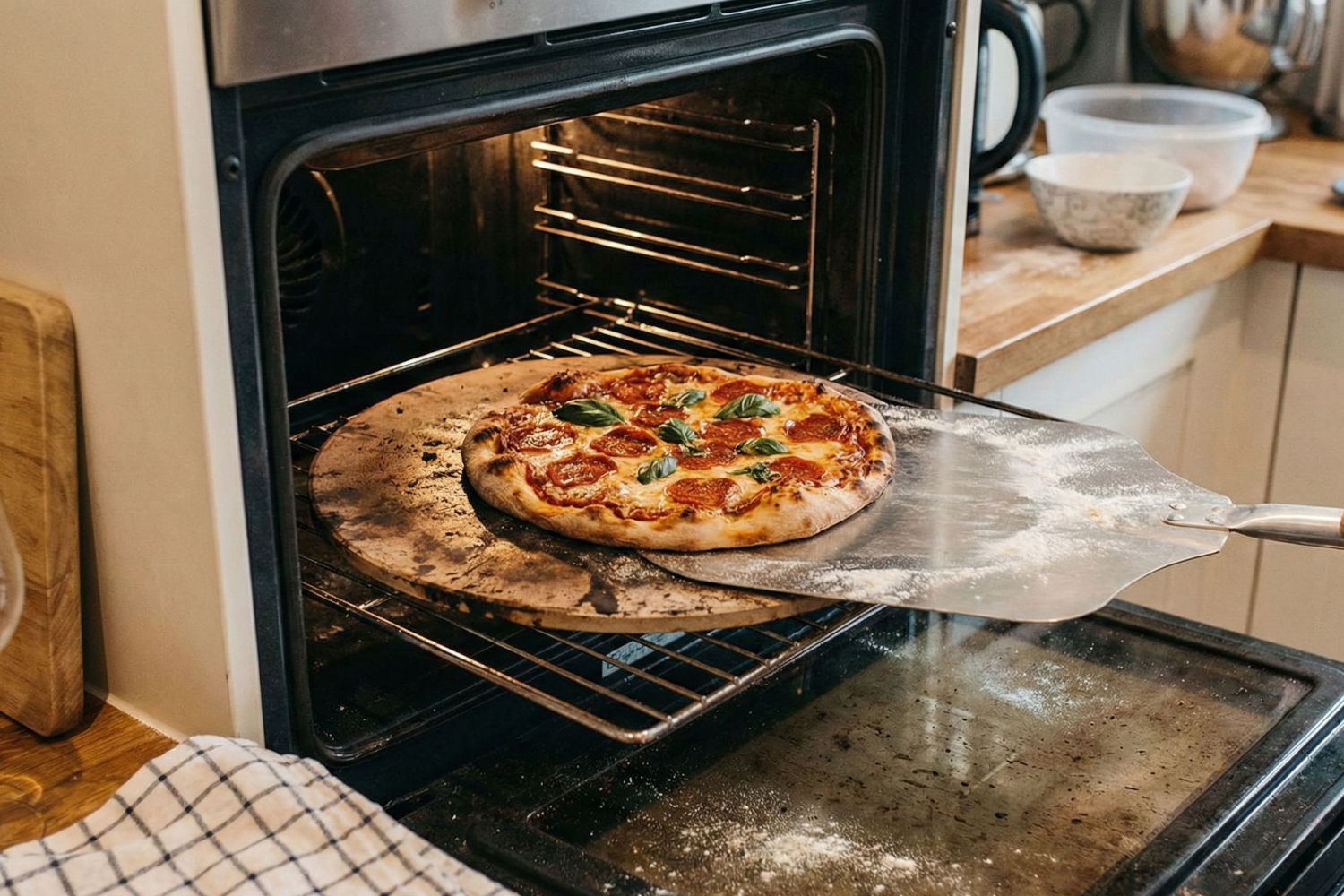
On a pizza stone, that same pizza takes 8 to 12 minutes. You'll still get a crispy bottom and good oven spring, but the browning is more gradual and even. The crust develops differently - it tends to be drier and more uniformly golden rather than spotted and blistered.
Which is "better" honestly depends on what style you're going for. If you're making Neapolitan-style pizza where char, blistering, and a fast bake are the whole point, steel is the clear winner. If you're making a New York-style pie where you want a crispier, more structured bottom with moderate browning, a stone does that beautifully. And if you're making something like a thick pan pizza or a Detroit-style with a longer bake, the baking surface matters less because the pan is doing most of the work anyway.
Moisture Management: Stone Has a Trick Steel Doesn't
Here's something that doesn't get talked about enough in the pizza stone vs pizza steel debate: porosity.
Pizza stones are porous. That means they don't just transfer heat into your dough - they actively wick moisture away from the bottom of the crust as it bakes. Pizza dough is wet, and if that moisture has nowhere to go, it steams the bottom instead of crisping it. A stone pulls that moisture into its pores, which helps produce a dry, crispy base even with higher-hydration doughs.
Steel is non-porous. It can't absorb moisture. Instead, it relies purely on its extreme heat transfer to flash-cook the bottom so fast that moisture doesn't have time to accumulate and steam. This works incredibly well - but it means you need to be more precise with your dough hydration and your preheat. A steel that isn't fully preheated, or a dough that's too wet and too thick, can still give you a soggy spot in the center.
In practice, this means stone is slightly more forgiving with wetter doughs and less precise preheats. Steel rewards precision and punishes sloppiness. If you're using the PizzaLogic calculator to dial in your hydration and fermentation, you'll be fine with either - but it's worth knowing the difference.
Preheat Time: Roughly the Same (With a Caveat)
Both surfaces need 45 to 60 minutes in your oven at max temperature to fully saturate with heat. Your oven's "preheat complete" beep is useless here - that just means the air is hot, not your baking surface. An infrared thermometer is the move for both.
The caveat is thickness. A 1/4" steel and a 3/4" stone are roughly comparable in preheat time. But if you go thicker on either (a 3/8" steel or a 1" stone), add another 15 to 20 minutes. The physics don't care about your schedule.
Recovery Between Pizzas: Steel Wins
This is where steel pulls ahead if you're making more than one or two pies in a session.
When cold dough hits a hot surface, the surface temperature drops. How fast it recovers depends on both thermal conductivity and thermal mass. Steel's conductivity advantage means it pulls heat back from the surrounding oven environment much faster than stone. A 1/4" steel is typically ready for the next pizza in 7 to 10 minutes. A 1/2" stone needs 10 to 15 minutes to recover.
If you're hosting a pizza night and cranking out five or six pies, that extra 5 minutes per pizza adds up fast. Over a six-pizza session, you could save 30 minutes with a steel. Your guests will appreciate not waiting around while you stare at an oven.
Bumping up to a 3/8" steel helps even more - it holds temperature above 700°F for over 90 seconds after loading dough, which means faster recovery and more consistent results across a multi-pie session.
Durability: Steel Wins (And It's Not Close)
This is honestly one of the biggest practical differences, and it rarely gets enough weight in comparison articles.
Pizza steels are virtually indestructible. You can drop them. You can leave them in a 500°F oven for three hours. You can use them on a grill over direct flame. You can hit them with cold dough straight out of the fridge. Short of actively trying to destroy one (good luck), a pizza steel will outlast you.
Pizza stones crack. It's not a matter of if - it's a matter of when and whether you can delay it. Thermal shock is the usual killer: a cold stone in a hot oven, cold dough on a stone that wasn't preheated long enough, a splash of cold water on a hot surface, or even just setting a hot stone down on a cold granite countertop. Cordierite stones are much more resistant to thermal shock than basic ceramic, but even cordierite isn't immune. Search any pizza forum and you'll find no shortage of cracked stone stories - sometimes from user error (not preheating long enough), sometimes from stones that just gave up after a couple years of heavy use.
If you buy a steel and take basic care of it - keep it seasoned, don't let it rust - it will last decades.
Weight and Handling: Stone Is More Manageable
A standard 14" x 16" pizza steel at 1/4" thickness weighs about 15 to 20 pounds. At 3/8", you're looking at 23 to 28 pounds. At 1/2", it can hit 30+ pounds. These are dense, heavy slabs of metal, and you need to think about whether your oven racks can handle the load and whether you're comfortable lifting them in and out.
A comparable pizza stone weighs significantly less - usually 6 to 10 pounds for a standard size. Much easier to move, much friendlier on oven racks, and less intimidating if you're new to baking on a dedicated surface.
Many steel owners just leave theirs in the oven permanently, which solves the handling problem and also adds thermal mass to your oven for more even heat distribution across all your cooking. But if you share oven duties with someone who doesn't want a 25-pound steel plate in there for every casserole, this becomes a conversation.
Grilling: Steel Is Better (And Safer)
Both surfaces work on the grill, but steel is the safer, more practical choice. It won't crack from thermal shock, handles direct flame without issue, and recovers heat faster in the more variable temperature environment of a grill.
A stone on the grill works but requires more babysitting. You need to preheat it very gradually, avoid direct flame contact with the edges, and be genuinely careful about thermal shock when cold dough hits the surface. One misjudge and you've got two halves of what used to be a pizza stone.
I covered the full grilling approach for both surfaces in the steel guide and the stone guide if you want the detailed walkthroughs.
Maintenance: Steel Takes More Effort
Here's where stone gets a point back. Pizza stones are essentially zero-maintenance. Don't use soap on them (it can absorb into the pores and flavor your next pizza), scrape off stuck-on food with a bench scraper or stiff brush, and let them dry completely before storing. That's it. The dark staining that builds up over time is normal - it's seasoning, not dirt.
Pizza steels need to be seasoned the same way you'd season a cast iron skillet - thin layers of high-smoke-point oil, baked on at 400°F. A well-seasoned steel develops a beautiful dark, nonstick patina over time, but you need to maintain it. If you let it get wet and don't dry it immediately, it will rust. If you scrub too aggressively, you'll strip the seasoning and need to rebuild it.
It's not a huge amount of work, but it's some work, and it's more than a stone requires. If you already cook with cast iron and understand the care routine, this will feel natural. If the idea of seasoning cookware sounds tedious, that's worth factoring into your decision.
Price: Stone Is Significantly Cheaper
A decent cordierite pizza stone runs $30 to $50. You can find basic ceramic ones for even less, though I'd steer toward cordierite for the thermal shock resistance.
A quality pizza steel starts around $70 to $80 for 1/4" thickness and goes up from there. The original Baking Steel brand and similar premium options can run $100 to $120+. Custom-cut steels from local metal shops can sometimes save you money if you're comfortable seasoning a raw piece of A36 yourself.
So steel is roughly two to three times the cost of stone. But given that steel is essentially indestructible and stone will eventually crack and need replacing, the lifetime cost math is closer than it looks.
So Which Should You Get?
Get a pizza stone if:
You're new to home pizza and want an affordable entry point. A stone will immediately and dramatically improve your crust compared to a sheet pan, and it's a low-risk way to level up your setup. It's also the better choice if you mostly bake one or two pizzas at a time, prefer a more gradually developed crust, or just don't want to deal with seasoning another piece of cookware.
Get a pizza steel if:
You're serious about home pizza and want the best crust possible from a home oven. If you're chasing Neapolitan-style char and blistering, hosting pizza nights where you need to bang out multiple pies quickly, or you're already using the PizzaLogic calculator to optimize your dough and want a baking surface that can keep up with your recipes - steel is where you want to be. The higher price is a one-time investment that pays for itself in durability and performance.
The real answer:
Most dedicated home pizza makers end up with both eventually. A lot of people in the pizza community report using their steel the majority of the time, but reaching for the stone when they're baking a thicker, breadier dough where that slower, moisture-wicking bake is actually what they want. They're different tools for different jobs, and having both in your rotation just means more flexibility.
Whatever you choose, the biggest upgrade isn't the surface itself - it's the preheat. Give either surface a full hour at your oven's max temperature, use semolina on your peel, and launch with confidence. The rest is just physics doing its thing.